
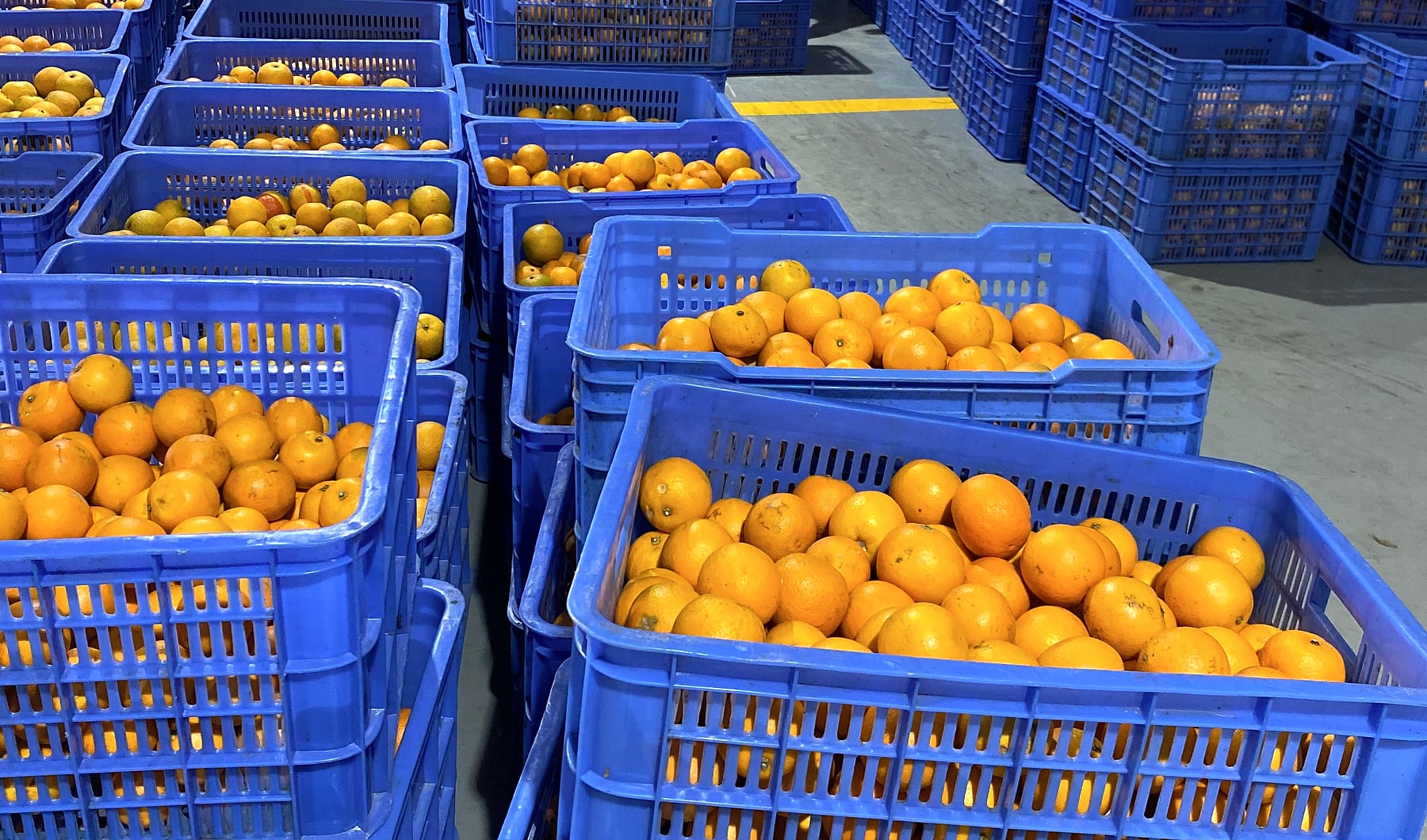
Fruit & Vegetable Processing Lines
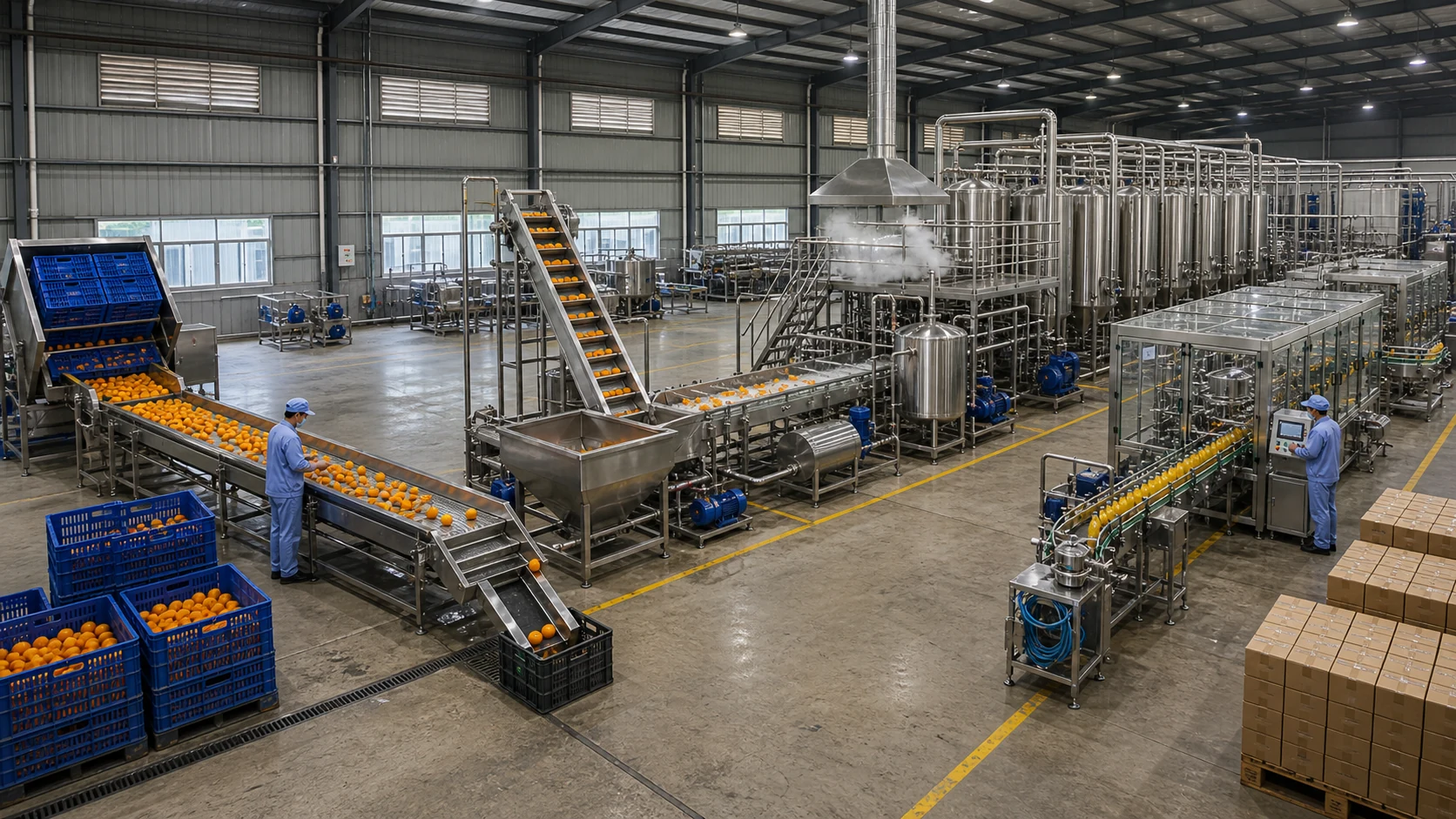
Configure juice, puree, paste, jam or beverage production around the real material flow: receiving, washing, extraction or pulping, tanks, heat treatment and filling.
ANMX Process Line Showcase
Configure juice, puree, paste, jam or beverage production around the real material flow: receiving, washing, extraction or pulping, tanks, heat treatment and filling.
The front end protects raw material quality; the middle section controls yield, pulp, Brix and viscosity; the final section protects shelf life through sterilization, CIP and the right package.
Orange, apple, mango, tomato and vegetable projects need different extraction, pressing, pulping, evaporation and sterilization choices. ANMX organizes the proposal around that route.
Share raw material, fruit size, hourly output, final product, Brix or pulp target, package type and destination country so the quotation starts from production logic.
Digital Line Explorer
Move through the production route as a buyer would inspect the plant: front-end receiving, washing, inspection, extraction or pulping, tanks, heat treatment, filling and support systems.
ANMX International Trade Co., Ltd.
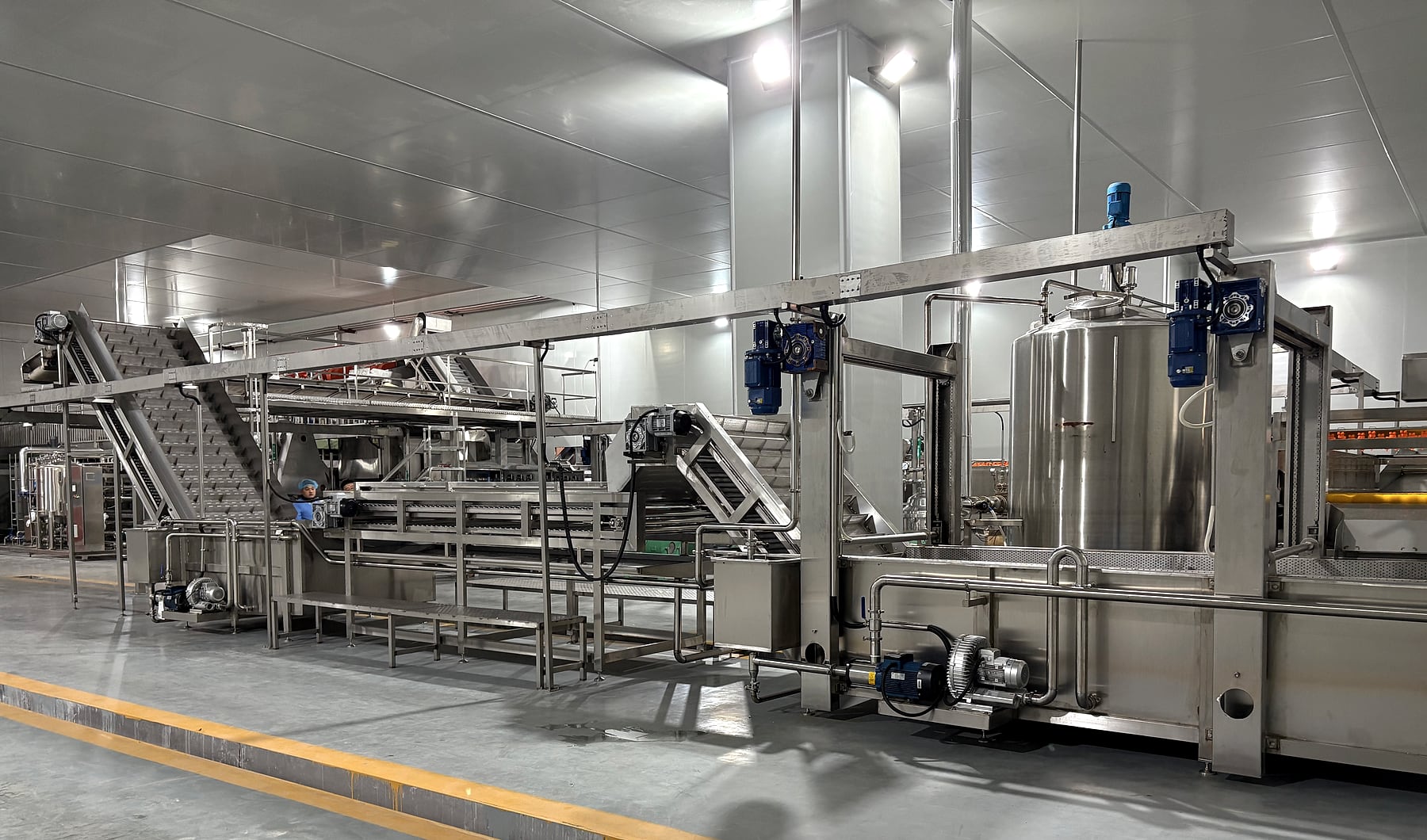
ANMX supplies complete fruit and vegetable processing lines and key equipment for orange juice, apple juice, mango puree, tomato paste, carrot products, jams and beverage preparation. Each line is built around the final product, target capacity and packaging format.
Product Reel
Compare ready-to-quote production lines for juice, puree, paste and beverage projects, then open the equipment section when you need technical details.
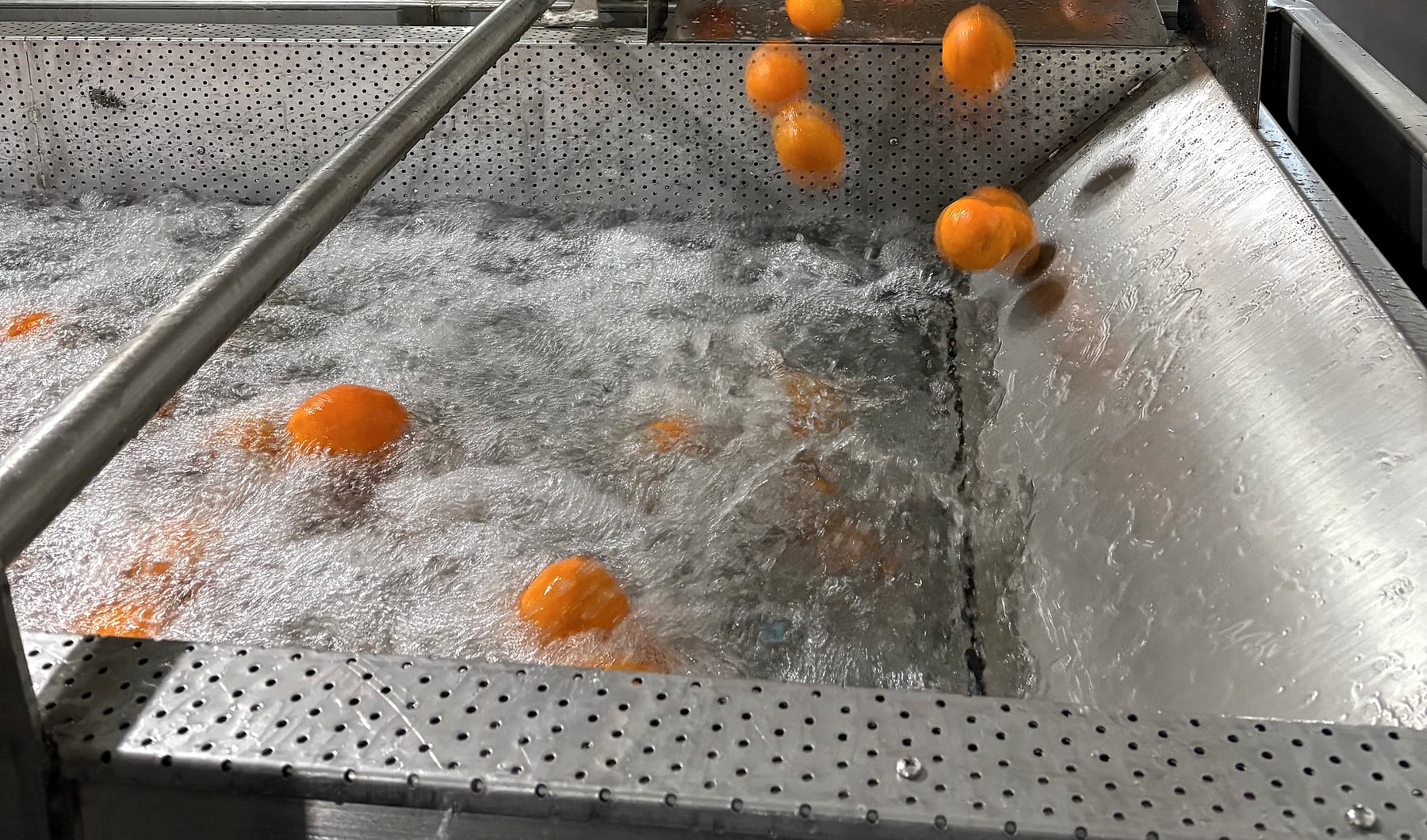
Crate receiving, washing, roller inspection, citrus extraction, juice collection, refining, sterilization and aseptic filling.
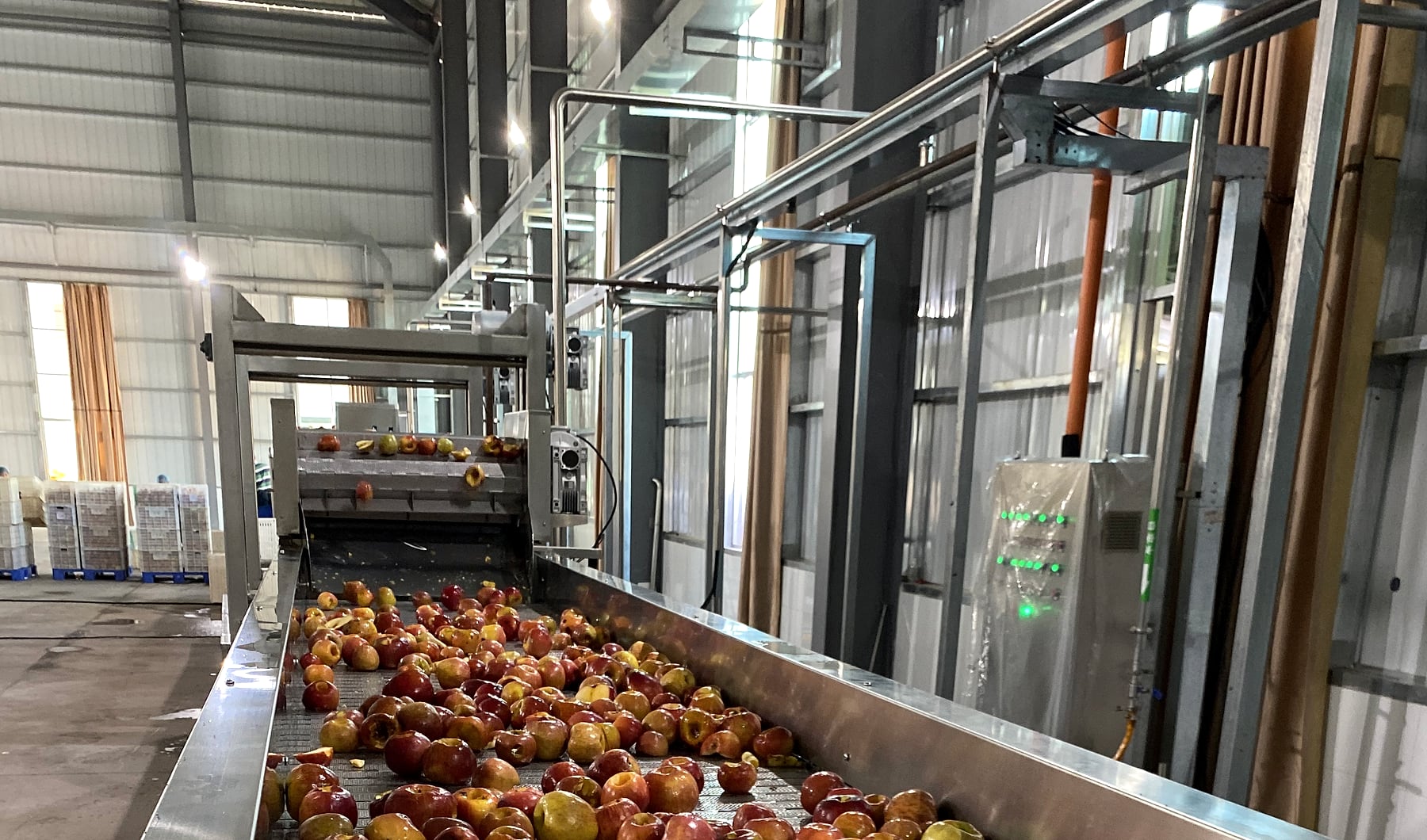
Washing, sorting, crushing, belt pressing, enzymolysis, filtration, concentration and filling for clear or cloudy juice.
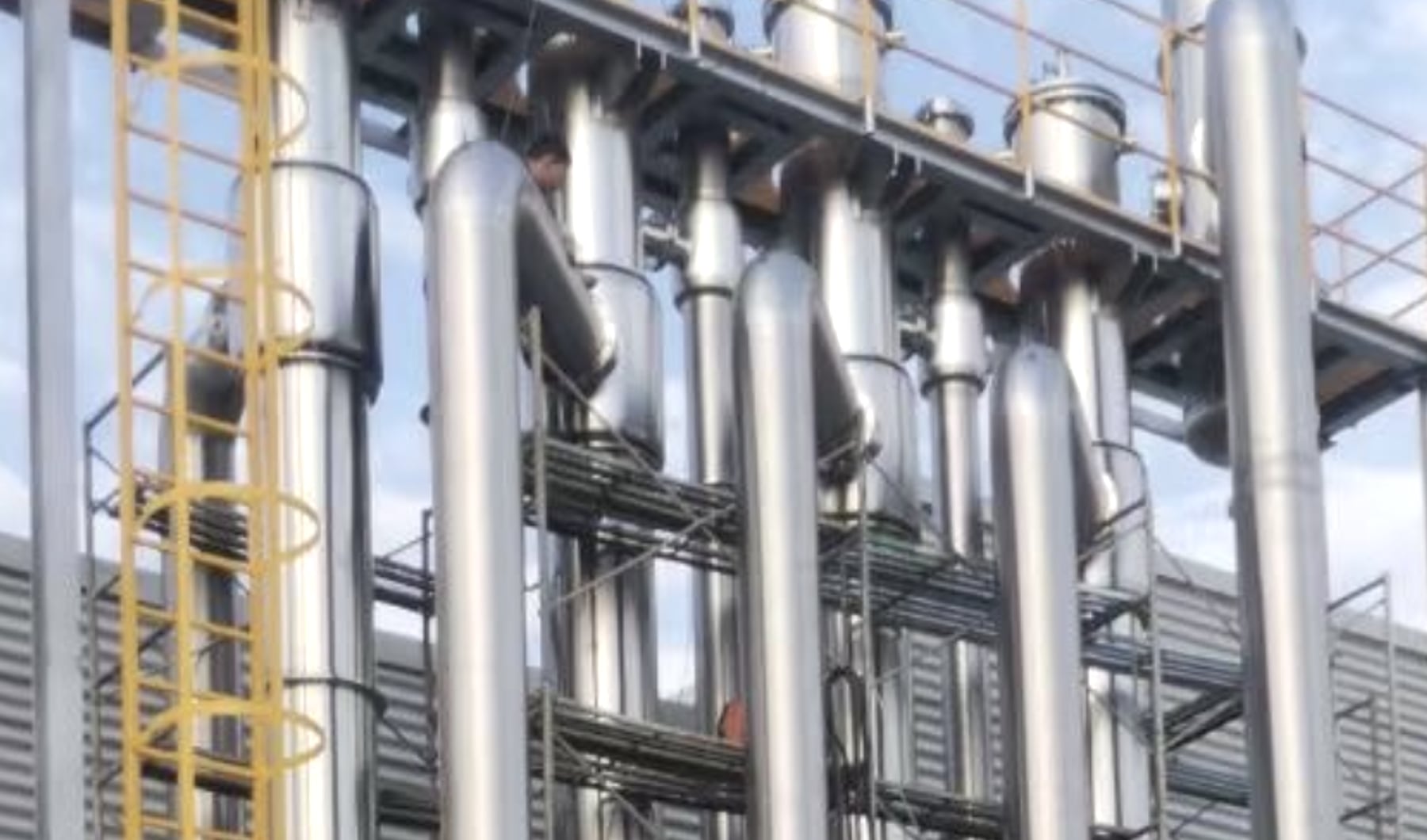
Washing, preheating, pulping, refining, evaporation, tube-in-tube sterilization and aseptic filling.
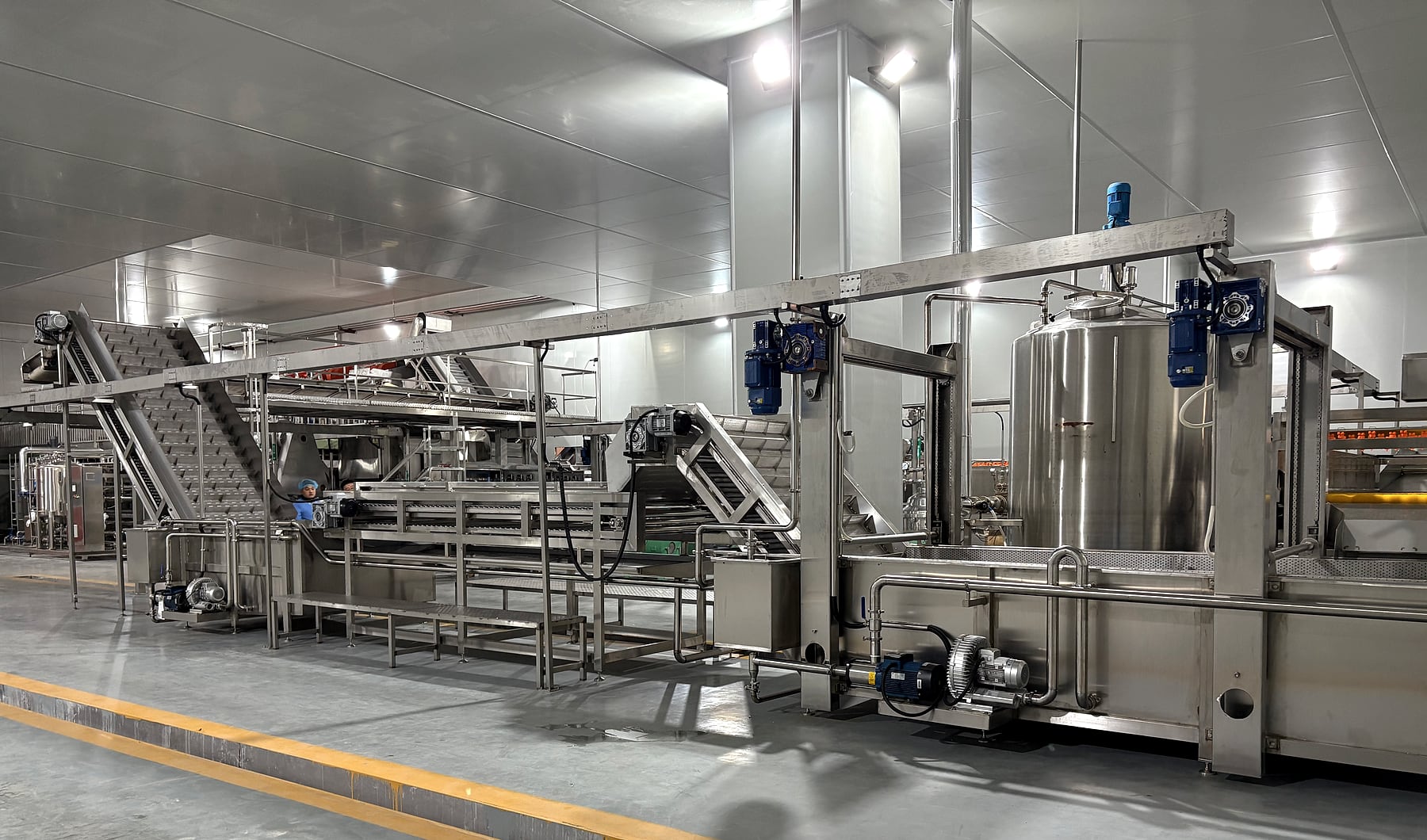
Washing, crushing, pulping, heat treatment, sterilization and filling for carrot or other vegetable juice and puree routes.
Project Quote
Select a production line, review the main equipment modules, and send the project details ANMX needs to prepare a focused quotation.
Start with the product you plan to sell: NFC juice, clear juice, puree, paste, jam or beverage.
View LinesCheck the core systems for washing, extraction, pulping, evaporation, sterilization, filling and utilities.
View EquipmentShare raw material, output, Brix or pulp target, final product, packaging format and destination country.
Send InquiryProduction Lines
Start with what you need to produce: NFC orange juice, concentrated juice, clear or cloudy apple juice, mango puree, tomato paste, vegetable juice, jam or prepared beverage. ANMX then matches the front-end handling, extraction, pressing, pulping, evaporation, sterilization, filling and utility sections.
Designed for NFC orange juice and concentrated orange juice. The line starts with crate receiving, washing, roller inspection, elevator transfer and sizing, then moves into citrus extraction, juice collection, pulp/oil refining, sterilization and aseptic filling.
Designed for clear, cloudy or decolorized apple juice. Typical sections include washing, inspection, elevator feeding, crushing, belt pressing, enzymolysis, filtration, concentration, sterilization and filling.
Designed for mango puree, mango jam and tomato paste. The route uses washing, sorting, preheating, pulping, refining, evaporation, tube-in-tube sterilization and aseptic filling for high-viscosity product handling.
Designed for carrot and other vegetable juice or puree products, including NFC juice, concentrate, puree and fermented pulp. The route covers washing, inspection, crushing, pulping, heat treatment, sterilization and filling.
Production Process
ANMX structures each proposal by production route. Fresh fruit or vegetables first enter receiving, washing and inspection, then move into extraction, pressing or pulping, followed by refining, evaporation or heat treatment, sanitary buffer tanks and final aseptic or hot filling.
Fruit or vegetables are received in crates, bins or hoppers. Scraper elevators and screw conveyors keep the front-end feed stable and move pomace or peel away from the line.
Bubble washers, brush washers and roller inspection conveyors remove soil, floating impurities and unsuitable fruit before extraction or pulping. Citrus projects may also require sizing before cup extraction.
Orange lines use citrus extraction and finishing; apple lines usually use crushing and belt pressing; mango, tomato and vegetable routes use preheating, pulping and refining to reach the required texture.
Seeds, peel, coarse pulp or suspended solids are controlled before product enters stainless storage, mixing or buffer tanks. The tank section keeps flow stable between upstream processing and downstream heat treatment.
Falling-film evaporators suit heat-sensitive juice concentration, while forced-circulation and tube-in-tube systems handle viscous puree or paste. Tubular sterilizers are used for juice and beverage routes.
Aseptic bag filling, BIB, PET, glass bottle, can or gable-top packaging can be selected by shelf-life and market plan. CIP, water treatment, degassing, coding and labeling complete the daily production system.
Process Knowledge
A reliable proposal should explain what happens to the product at every stage: what enters the line, what is removed, how quality is protected and which filling format the final product will use.
Public citrus processing references place grading and washing before extraction because unsuitable fruit and poor washing increase contamination risk.
Orange juice must be finished or refined after extraction. Apple juice normally needs crushing and pressing, and puree lines need pulping and refining instead of clear-juice filtration.
Clear juice, high-pulp orange juice, mango puree and tomato paste need different heat-exchanger choices based on viscosity, pulp content, Brix target and shelf life.
Aseptic bags and BIB are common for bulk juice, puree and concentrate, while PET, glass, can or gable-top packages require different filling and cooling equipment.
Line Engineering
A good proposal connects every machine to a process purpose: remove soil, control fruit quality, extract or pulp, separate unwanted solids, concentrate or sterilize, hold product in sanitary tanks and fill into the chosen package.
Fruit type, size, condition, seasonality and feeding method determine whether the line needs scraper elevators, screw conveyors, bubble washing, brush washing, roller inspection or sizing.
Citrus extraction, screw extraction, belt pressing, crushing, pulping and refining are selected by product texture, yield target and whether the output is clear juice, cloudy juice or puree.
Steam blanching, evaporation, tubular sterilization and tube-in-tube sterilization are matched to viscosity, pulp content, Brix target, color protection and shelf-life requirement.
Storage tanks, buffer tanks, pumps, CIP cleaning, water treatment, aseptic bag filling, BIB, bottle or can packaging complete the system.
Equipment Modules
Each equipment group below is placed where it belongs in the production route, so buyers can see why it is used and which capacity range or product condition it supports.
Receiving, lifting, washing, sorting, grading, crushing, extraction, pressing, pulping and tank buffering.
Forced-circulation or falling-film evaporation selected by viscosity, heat sensitivity and Brix target.
Tube-in-tube and tubular UHT systems matched to puree, paste, juice or beverage flow behavior.
Aseptic bag, BIB, drying, CIP and pasteurization modules protect product after heat treatment.
Can, bottle, water treatment, degassing, coding, labeling and homogenizing modules complete the line.
Twenty-four catalog items cover the wet front end: scraper elevators, screw conveyors, bubble and brush washers, roller inspection, blanching, juicing, pitting, crushing, citrus extraction, pulping, refining and buffer tanks.
Forced-circulation evaporators handle tomato paste, mango paste and other viscous products. Falling-film evaporators reduce residence time for heat-sensitive orange, carrot and date juice concentration.
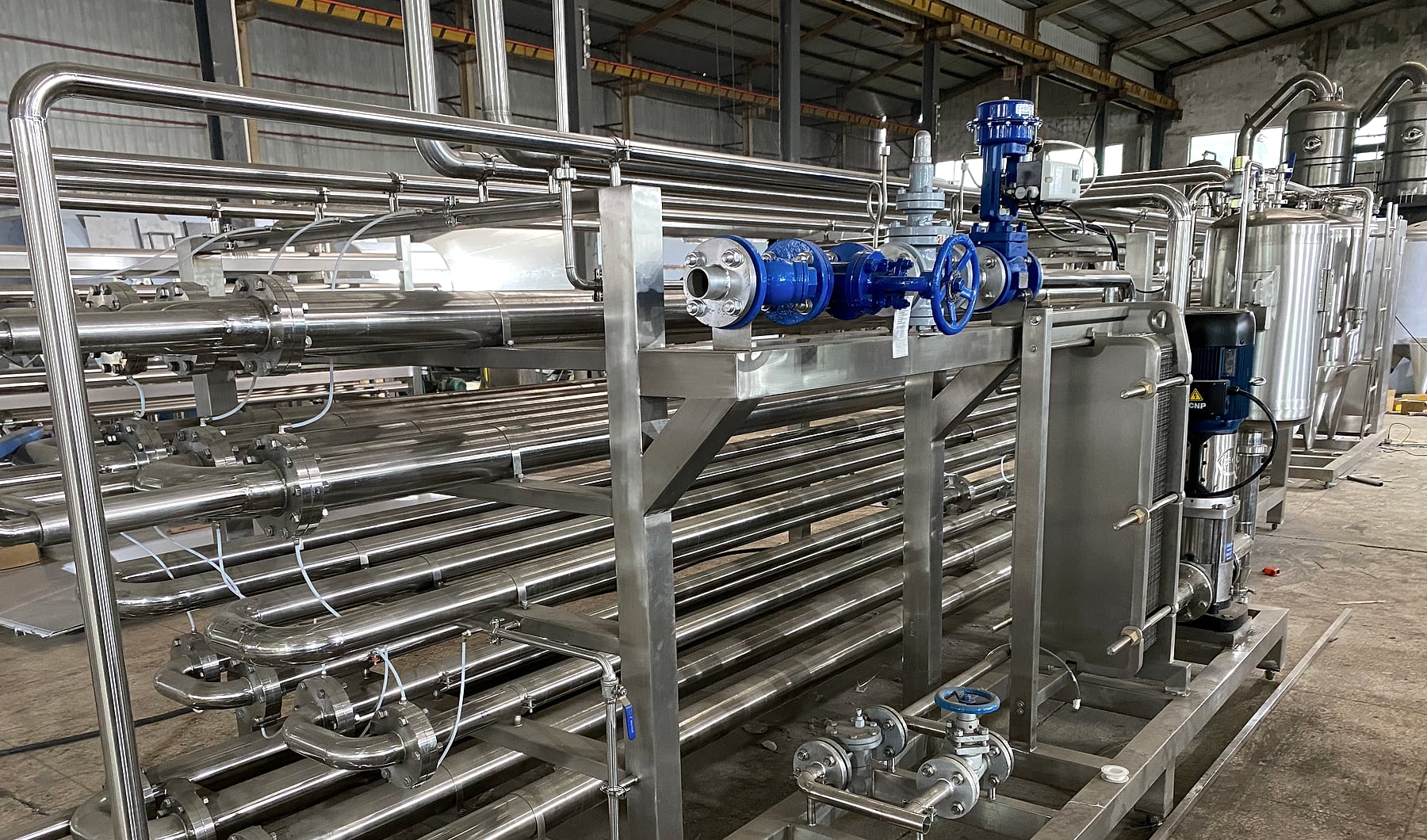
Tube-in-tube sterilizers suit jam, concentrated juice, mango paste, tomato paste and other high-viscosity products. Tubular sterilizers suit high-pulp juice, apple juice, pear juice, carrot juice and beverages.
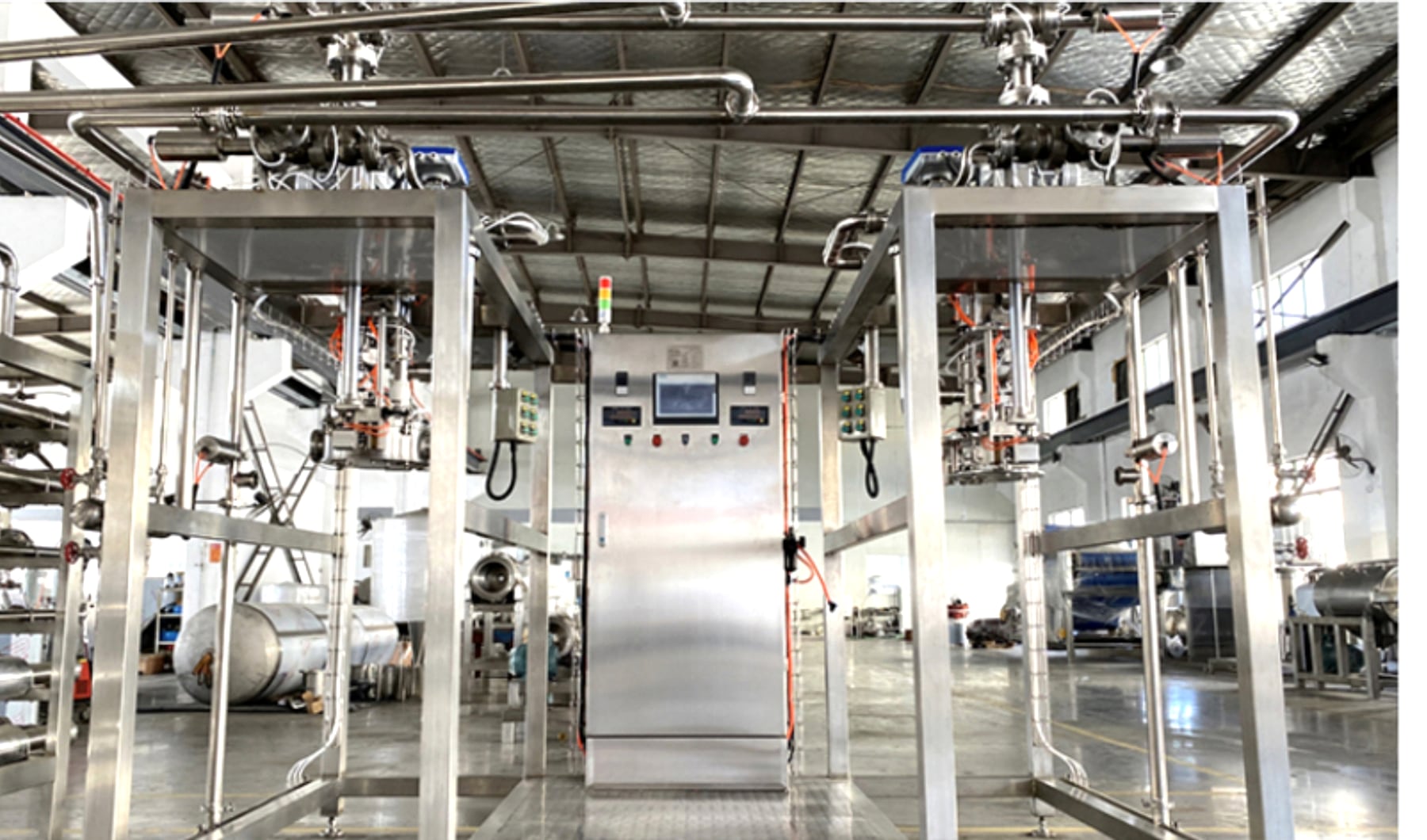
Aseptic large-bag filling covers 5-220 L packages for NFC juice, puree, jam and concentrate. BIB filling covers 1-30 L small aseptic packages, supported by CIP, drying and pasteurization modules when the line requires them.
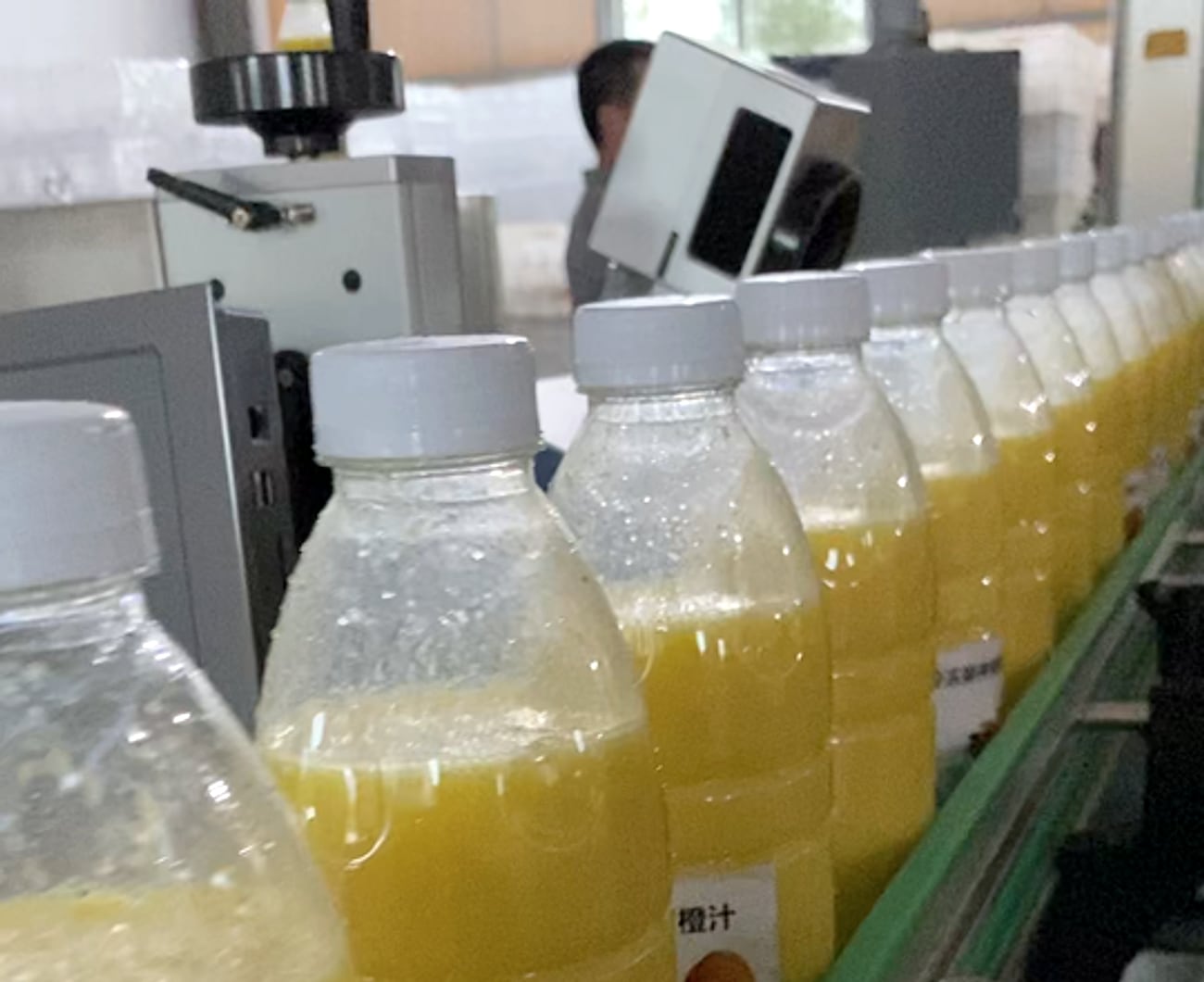
Can filling and seaming, four-in-one bottle filling, sugar melting, colloid milling, duplex filtering, water treatment, vacuum degassing, centrifuging, coding, labeling and homogenizing are added according to the final package and product route.
Engineering Data Points
These are not final quotations; they are reference ranges from the equipment catalog. Final selection depends on material condition, viscosity, target Brix, hourly output, packaging format, utilities and automation level.
Approx. 1-15 t/h for fruit material handling, enclosed screw conveying and pomace transfer.
Approx. 3-52 t/h for apples, pears, frozen berries, bananas and selected vegetables before pressing or pulping.
Approx. 1-22 t/h, with apple juice yield listed at 75% or above in the equipment reference.
Approx. 3-20 t/h sizing before cup extraction, with citrus fruit diameter reference of 55-110 mm.
Forced-circulation systems for high-viscosity paste and falling-film systems for heat-sensitive juice, with water evaporation up to approx. 20 t/h.
For 5-220 L bags, with reference filling capacity of approx. 5,000-14,000 L/h depending on model.
Support Systems
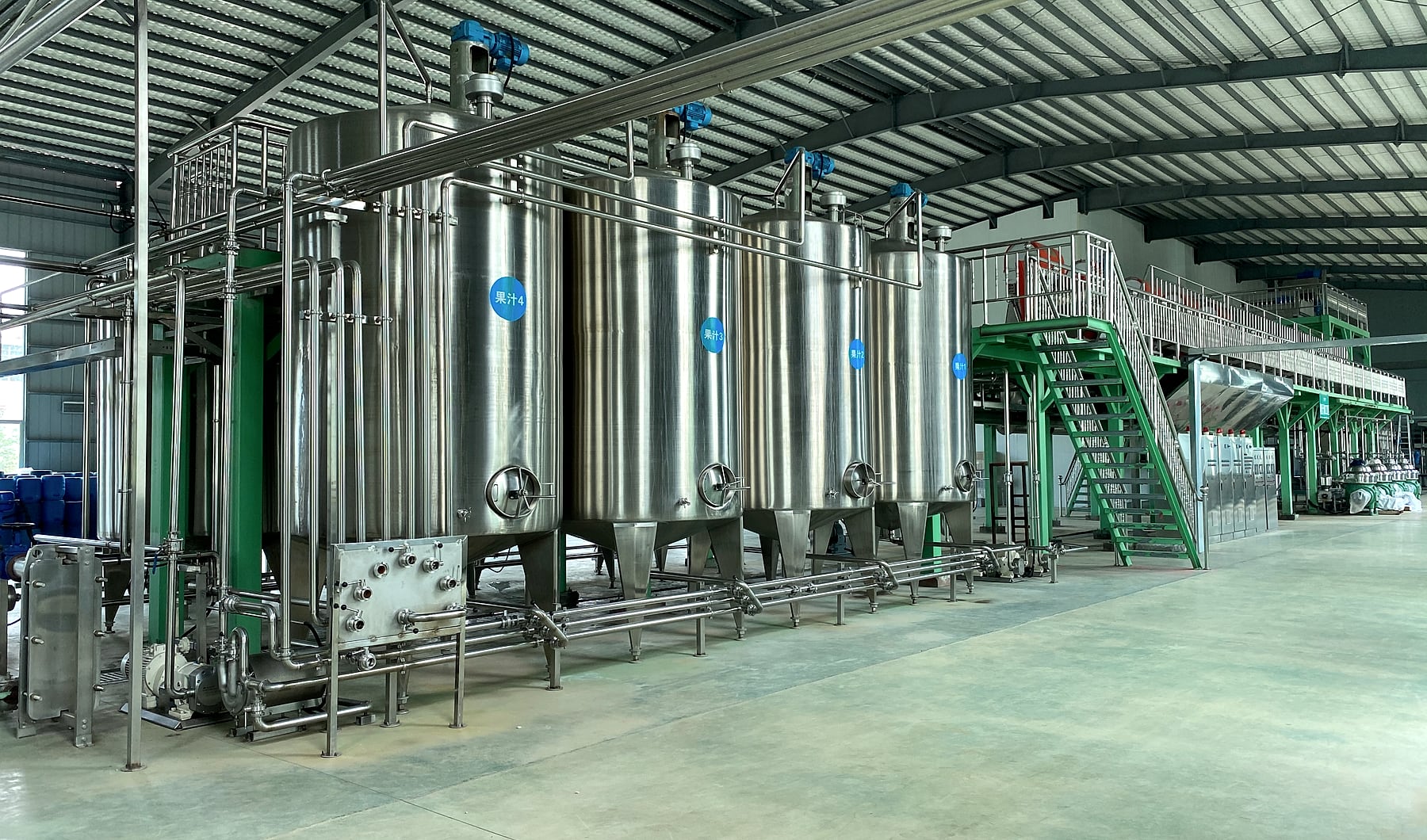
Support equipment includes mesh belt dryers, drying rooms, CIP cleaning, shower pasteurization, bottle inversion sterilization, can filling and seaming, four-in-one bottle filling, water treatment, vacuum degassing, labeling and coding. These modules are selected only when they fit the product route and packaging plan.
Discuss Full LineAbout ANMX
ANMX International Trade Co., Ltd. turns equipment resources into clear export proposals: product route, capacity range, equipment scope, utility needs, packaging choice and commercial documents for overseas buyers.
We start from the product to be sold, then define receiving, washing, extraction or pulping, tanks, heat treatment, filling, CIP and packaging sections.
Capacity and model references from the equipment catalog are kept visible so buyers can compare whether the proposed line fits their output target.
The layout follows how operators run the line: wet front-end handling, controlled product transfer, heat treatment, sterile filling and cleaning routines.
Share raw material, final product, hourly capacity, packaging format and destination country; ANMX will help define the equipment scope for evaluation.
Custom Project Quote
Share your raw material, fruit size or condition, final product, hourly capacity, Brix or pulp requirement, packaging format, destination country and automation target. ANMX will use this information to prepare a practical equipment scope and quotation basis.
Account Access
Product catalog and quote tools are available after account login.
Custom Project Quote
Share your raw material, final product, hourly capacity, package type, destination country and required equipment scope. ANMX will use the information to prepare a more accurate equipment list and quotation basis.
Product Detail
Equipment Detail